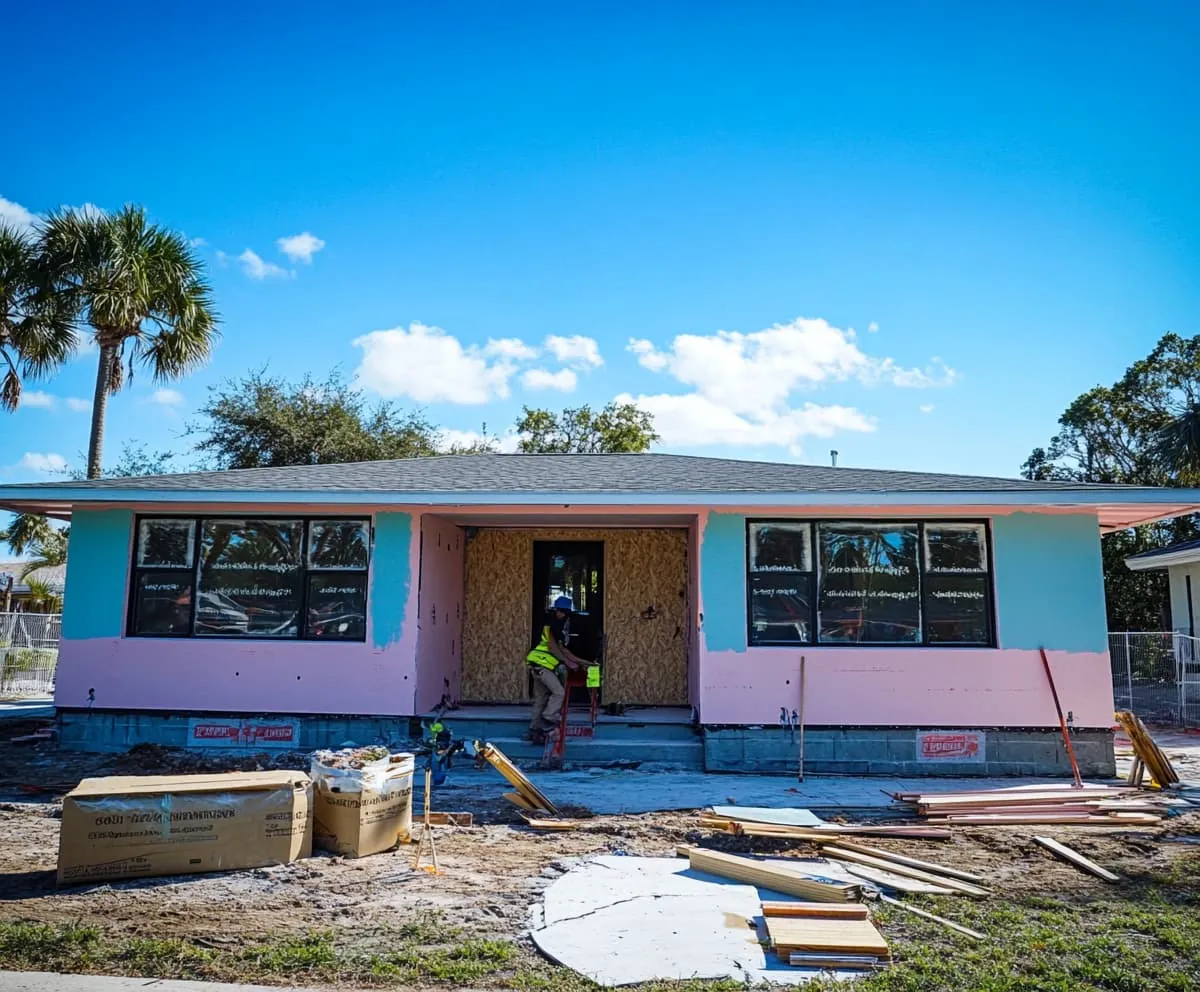

Hard money loans in Florida are real estate-secured loans commonly used for short-term investment needs, such as buying a property that needs work, bridging a financing gap, or refinancing an investment property. Private and specialized lenders evaluate the property, the borrower, the proposed loan, and the plan for repayment.
They can help with a transaction that doesn’t fit a bank’s requirements or timetable. The trade-off is cost and a repayment deadline that may arrive before the property is sold or ready for long-term financing.
For an investor, three questions matter: Does the property support the loan? Can you carry the costs? How will you pay it off?
At Hard Money Ron, Ron Stevenson works as a mortgage broker, placing loans with third-party private and institutional lenders. His services focus on business-purpose investment-property financing across Florida’s west coast, from Sarasota through Pasco County. Owner-occupied homes are outside his stated offering. Read about Ron’s role.
What Is a Hard Money Loan?
A hard money loan uses real estate as collateral and is arranged around a particular transaction. It commonly provides temporary financing until a sale, refinance, or another planned source of repayment.
“Hard money” and “private money” overlap in everyday lending language. Neither label tells you the interest rate, documentation requirements, payment schedule, or lender’s rights. Those details come from the actual financing agreement.
Some loans require monthly interest-only payments, with the principal due at maturity. That final principal payment can be large. Paying interest each month does not reduce the balance on an interest-only loan.
Consider an investor purchasing a rental property in St. Petersburg that needs repairs before a long-term lender will accept it. Short-term financing could cover an eligible acquisition, followed by repairs and refinancing. Before borrowing, the investor needs to check the future lender’s requirements and budget for the possibility that the refinance takes longer than planned.
When Does Hard Money Make Sense?
Hard money is worth evaluating when it solves a concrete financing problem and the investment can support the additional expense.
| Situation | Possible use | Question to answer before borrowing |
|---|---|---|
| Property needs substantial repairs | Finance an eligible acquisition or improvement project | Can you fund work and overruns before the property produces proceeds? |
| Purchase closes before another sale | Bridge the timing gap | What repays the loan if that sale is delayed? |
| Equity is tied up in an investment property | Refinance or release eligible equity | Does the use of the cash justify the new debt and costs? |
| Commercial or unusual property | Seek a lender suited to that asset | Will the property support both this loan and the planned exit? |
| Contract has a tight closing deadline | Seek financing with an executable timetable | Which valuation, title, insurance, and funding conditions remain? |
Hard money can be a poor fit when a less expensive loan can meet the same need, cash reserves are thin, or repayment requires a perfect sale price and schedule.
A useful test is to run the project with a later payoff, higher expenses, and lower proceeds. If a modest setback eliminates the margin, reconsider the price, financing structure, or transaction.
Hard Money Ron’s loan programs describe the financing categories Ron can discuss. Program names do not establish eligibility or final terms.
Hard Money vs. Bank Loans
The better choice is the loan that fits the property, borrower, and holding period at an acceptable total cost.
| Question | Hard money financing | Bank financing |
|---|---|---|
| What is it commonly used for? | Short-term investor needs and transactions requiring specialized review | Purchases, refinances, and longer-term financing that meet program standards |
| What gets evaluated? | Collateral, borrower, transaction structure, and repayment plan | Borrower finances, collateral, repayment capacity, and program eligibility |
| Can a property needing work qualify? | Some lenders finance eligible repair projects | Depends on the product; renovation and construction programs exist |
| How fast can it close? | Depends on the file and remaining funding conditions | Depends on the lender, product, and remaining conditions |
| How do costs compare? | Often higher for short-term investor financing | Often lower for an eligible transaction |
| What happens at the end? | Principal may be due in a balloon payment | Amortization and maturity vary by product |
Avoid treating either category as one uniform product. A bank can offer bridge or construction financing. A private lender can have strict credit and liquidity requirements. Compare actual proposals rather than relying on the labels.
See hard money vs. bank loans for the supporting comparison.
What Do Florida Hard Money Lenders Evaluate?
Expect the lender to examine the property, the amount requested, your available funds, and the source of repayment. Credit and financial documentation can affect eligibility and terms.
Property value and condition
The lender needs an acceptable valuation of the collateral. Location, comparable sales, condition, occupancy, permitted use, and marketability can affect that assessment.
Ask which valuation method will be used, who pays for it, and whether a lower valuation could reduce the loan. Your purchase price or repair budget is not proof of market value.
LTV, LTC, and ARV
These terms describe different parts of the financing:
| Term | Meaning | What to clarify |
|---|---|---|
| LTV: loan-to-value | Loan amount divided by the accepted property value | Which value and which loan balance are being used? |
| LTC: loan-to-cost | Loan amount divided by lender-defined eligible project costs | Which purchase, repair, and other costs count? |
| ARV: after-repair value | Estimated property value after planned improvements | What work and market assumptions support the estimate? |
LTV is the loan amount divided by the accepted property value, shown as a percentage. A smaller percentage means the loan is a smaller share of the value.
That is arithmetic, not an approval guideline or a statement of available leverage. Each lender sets its own limits, and they depend on the property, the borrower, and the deal.
An advance based on current value is different from one measured against projected ARV. A commitment that includes future renovation draws is different from the cash released at closing. Ask for both figures.
For more detail, read what loan-to-value means.
Borrower finances and project execution
Be ready to discuss credit, liquidity, existing obligations, relevant experience, and the funds available for payments or unexpected costs. Documentation varies by lender and transaction; a short preliminary checklist is not a complete underwriting standard.
For a renovation, ask what scope, contractor information, permits, inspections, and draw documentation the lender needs. Confirm whether you must pay for work before reimbursement.
Ron’s loan requirements page provides a starting point for the conversation.
What Do Hard Money Loans Cost in Florida?
The cost includes interest and applicable fees, not just the advertised rate. Ask for written, itemized terms tied to your expected payoff date.
Ron’s rates and terms page does not publish a universal rate or points schedule. Pricing requires a deal review.
Interest, points, and other charges
A point is a charge calculated as a percentage of the stated loan amount, with one point equal to one percent of it. Clarify whether a quoted charge is a lender fee, broker compensation, or another expense, and whether further charges apply.
Ask how interest is calculated: on funds actually advanced, the entire commitment, or another contract-defined basis. Request details about minimum interest, prepayment charges, servicing, inspections, draws, extensions, and payoff fees.
Charges paid from loan proceeds reduce the cash available for the purchase or project. A quoted gross loan amount does not necessarily equal usable proceeds.
Florida mortgage taxes
Two state taxes can affect a mortgage closing:
- Documentary stamp tax on a recorded mortgage. Florida charges it on the debt a recorded mortgage secures. See the Department of Revenue's documentary stamp tax guidance.
- Nonrecurring intangible tax. Florida charges it on the obligation secured by Florida real property, subject to valuation limits and applicable rules. The lender is legally liable and may pass the charge to the borrower. See the department's nonrecurring intangible tax guidance.
Ask the closing professional to calculate the actual amounts for your documents. Exemptions, prior tax payments, refinances, and other details can change the treatment. Deed transfer taxes are a separate item.
Cash to close, borrowing cost, and payoff are three different numbers
Borrowers often compare only the interest rate. A loan quote contains several separate figures, and each one answers a different question. Ask your lender or broker to put all of them in writing for your deal.
| Figure | What it includes | Why it matters |
|---|---|---|
| Cash to close | Your contribution toward the purchase, lender and broker charges, mortgage taxes, title, valuation, recording, insurance, and any reserves, minus deposits already paid | The money you need available on closing day |
| Borrowing cost | Interest for the whole holding period, points and other fees, mortgage taxes, and any draw, inspection, extension, or payoff charges | What it costs to carry the loan until you repay it |
| Principal payoff | The loan balance due at maturity | Not a cost, but it still has to be repaid from a sale, refinance, or another source |
| Holding costs | Property taxes, insurance, utilities, upkeep, and repairs | Outside the loan, but part of the same budget |
A delay costs money even when the rate does not change. On an interest-only loan, interest keeps accruing every month the balance is outstanding. A longer holding period raises the total cost, and an extension may add its own charges.
Before you commit, ask for payoff figures at more than one date, such as your planned date and a later one. Then test the project with a slower sale or refinance and a lower selling price. If the margin disappears after a modest delay, reconsider the price, the structure, or the deal.
Ron reviews each deal individually, so exact pricing comes from a conversation about your property and your plan. This article doesn't quote a rate, a points schedule, or a maximum loan amount.
How the Loan Process Works
The practical sequence is a deal review, lender selection, underwriting, closing, and repayment. Early discussions establish possibilities; funding follows completion of the lender’s conditions.
- Present the transaction. Provide the address, purchase price or existing payoff, value estimate, requested financing, deadline, and intended exit.
- Review potential structures. Discuss which lending sources may fit, the proposed amount, costs, maturity, cash contribution, and remaining conditions.
- Complete underwriting. Supply the lender’s requested borrower and property information. Valuation, title, insurance, and project review can change an initial proposal.
- Confirm closing figures and sign documents. Reconcile proceeds, charges, required cash, collateral, guarantees, payment obligations, and the payoff deadline before committing.
- Manage the loan through repayment. Follow payment and draw requirements and track the sale or refinance against maturity.
For the supporting process page, see how hard money loans work.
A preliminary term sheet is not an unconditional funding commitment. Ask what remains outstanding and who is responsible for each item before relying on a closing date.
Florida Property Issues to Check Early
Insurance and flood exposure
Get a quote for the property’s actual use and condition. Tell the insurance professional if it will be vacant, rented, under renovation, or under construction.
Flood risk is not limited to mapped high-risk areas. The National Flood Insurance Program explains this in its flood-risk guidance. Discuss the location, coverage, and lender requirements with an insurance professional.
Wind and flood coverage are different. Florida’s Department of Financial Services explains that hurricane coverage does not cover flooding and that a separate hurricane deductible may apply. Read its hurricane deductible guidance, then check the actual policy rather than assuming the examples apply to your property.
Repairs, permits, title, and association obligations
Investigate roof condition, water damage, major systems, open permits, and the permitted scope of work before relying on a renovation estimate. Ask the contractor and local building department what the project requires.
Have the closing professional review ownership and liens. For association-governed property, request relevant assessments, rental restrictions, insurance responsibilities, and financial records. Put known costs into both the ownership budget and the exit calculation.
Investment use and occupancy
Ron’s offering is for business-purpose loans on investment property, with owner-occupied homes excluded, as stated in his terms and disclosures.
Describe the intended use and occupancy accurately. Federal rules distinguish business-purpose and consumer-purpose credit and contain particular rules for rental property. The CFPB’s Regulation Z commentary explains those distinctions. Mixed personal and rental use needs careful review; do not infer eligibility from the “hard money” label.
Plan the Payoff Before Closing
An exit strategy identifies the money that repays the loan and the steps required to make that money available.
If you plan to sell: Estimate proceeds after commissions, concessions, closing costs, debt payoff, and unpaid property expenses. Test a later sale and a lower selling price.
If you plan to refinance: Speak with a prospective long-term lender early. Check borrower eligibility, property condition, valuation, rental-income requirements, and any ownership or seasoning rules that apply. A completed renovation does not guarantee refinancing.
If repayment comes from another transaction: Check the expected net proceeds and timing. A signed contract can still fail to close.
If the exit slips: Contact the lender before maturity. An extension requires the contractual right or the lender’s agreement; it is not a dependable backup by itself.
Failure to repay can lead to default charges and enforcement against the collateral. A guarantee can create obligations beyond the property. Read the documents with qualified counsel to understand your exposure.
Questions to Ask Before Accepting Terms
Use these questions to compare written proposals:
- Who is the actual lender, and who will service the loan?
- What are the broker’s and lender’s charges, who receives them, and when are they earned?
- What conditions can change the amount or stop funding?
- What value supports the loan, and how much is released at closing?
- What is the itemized cash-to-close figure after deposits and any deductions?
- Is interest charged on drawn funds or the full commitment?
- Are there minimum-interest, prepayment, draw, inspection, extension, or payoff charges?
- What collateral and personal guarantees are required?
- What is due at maturity, and what default terms apply?
- If an extension is possible, what conditions, notice, and fees apply?
Verify the parties’ identities and applicable licensing. The Florida Office of Financial Regulation’s verification page directs mortgage-related searches to NMLS Consumer Access. An NMLS number printed on a website is a starting point for checking a record, not proof of current authorization.
How Ron’s Lender Network Fits the Decision
A direct lender evaluates a transaction against its own programs. A broker can seek a fit among the lenders available through the broker’s relationships.
Ron describes his work as placing investor loans through a network of private and institutional lenders. A rejection by one source may leave other options to evaluate. That does not promise approval, access to every lender, or the lowest available price.
The useful comparison is between executable proposals: proceeds, cash needed, charges, closing conditions, and repayment obligations. Ask what options were considered and why the proposed structure suits the transaction.
Talk Through Your Florida Investment Property
Have the address, purchase price or current payoff, estimated value, requested amount, closing date, and intended repayment plan ready. Add a repair budget if work is involved.
Ron can review the scenario and discuss potential financing through his lender relationships. Start with a call rather than guessing which program fits.
Call Ron Stevenson: (727) 424-2720
Prefer email? Send Ron a short property summary.
Ron Stevenson is a mortgage broker; loans are funded by third-party lenders. Business-purpose investment-property financing only. Approval, timing, and terms are subject to lender review. Examples are educational illustrations, not offers or commitments. This article provides general information, not individualized legal, tax, or investment advice.