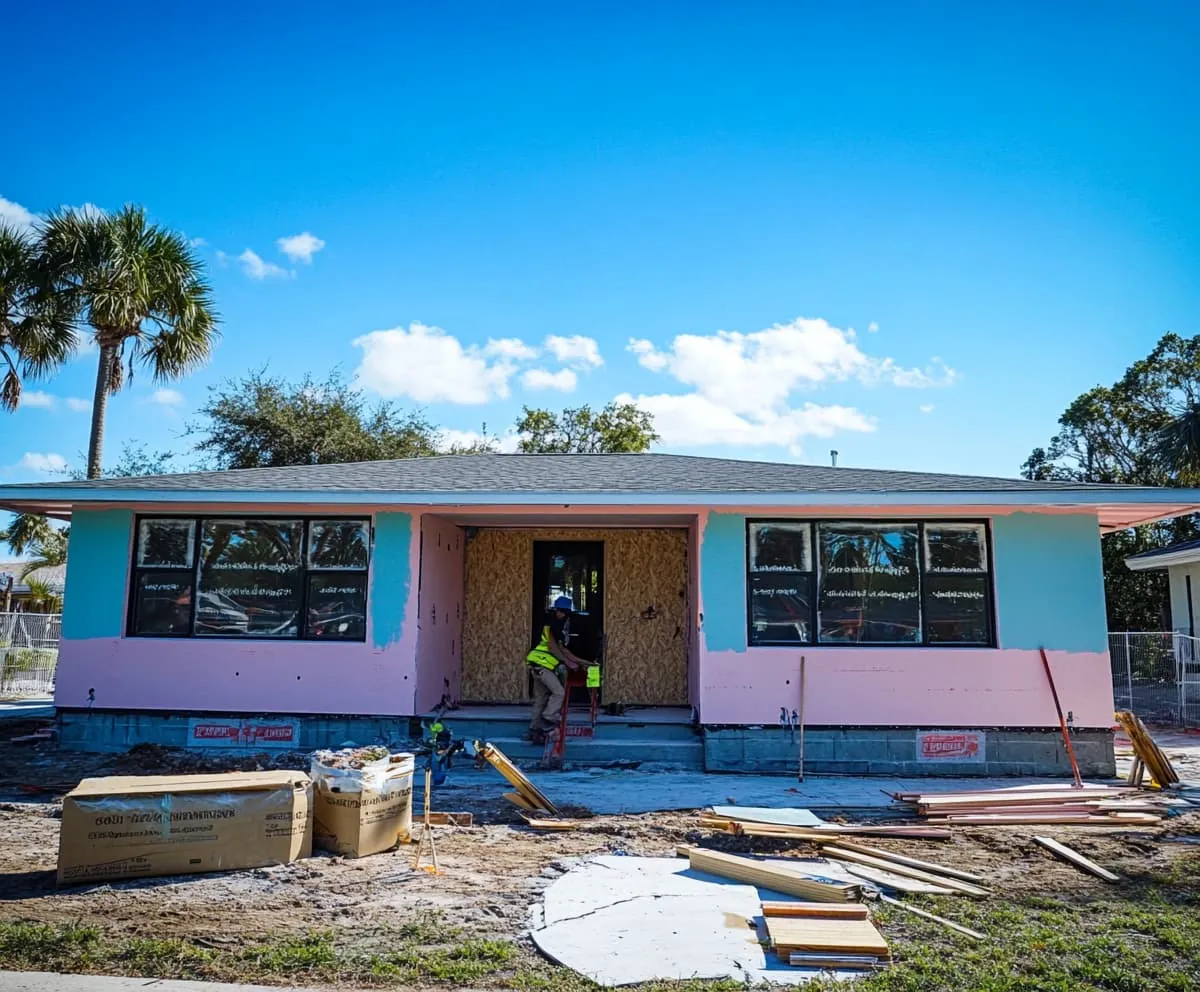

You found a house in Tampa that needs work. The asking price looks reasonable, the renovation opportunity is promising, and comparable homes suggest there could be room for a profit.
There's just one problem: You need money to buy the property, and you still need money to renovate it.
That's the financing challenge behind many fix-and-flip investments.
Fix-and-flip loans in Florida are short-term real estate loans designed for investors purchasing properties they intend to renovate and resell. Depending on the lender and loan structure, financing may address the acquisition, eligible renovation expenses, or both.
These loans are frequently offered by private and hard money lenders that evaluate the property, proposed improvements, borrower qualifications, and planned resale.
But financing a flip involves more than getting approved to purchase a house.
The lender needs to understand what the property is worth today, what work it needs, what a qualified buyer might pay when the work is finished, and how the investor plans to repay the loan.
An attractive purchase price won't rescue a project with an unrealistic renovation budget or resale estimate.
This guide explains how Florida fix-and-flip financing works, what lenders look for, how after-repair value affects a loan, and how investors can prepare for a more productive financing conversation.
What Is a Fix-and-Flip Loan?
A fix-and-flip loan is a short-term real estate loan intended to help an investor acquire, improve, and ultimately resell a property.
The property serves as collateral, and the anticipated sale is usually the primary repayment strategy.
Traditional residential mortgages are often designed around long-term ownership and occupancy or rental use. Fix-and-flip financing addresses a different objective: completing a specific real estate project and paying off the loan after the property is sold.
For example, imagine an investor identifies a vacant house in Clearwater.
The property has an outdated kitchen, aging mechanical systems, damaged flooring, and several deferred maintenance problems.
The investor intends to purchase the house, complete the necessary improvements, market it to qualified buyers, and repay the financing from the sale.
A fix-and-flip lender may evaluate that transaction as a complete investment project rather than looking only at the property's present condition.
Approval remains subject to the particular lender's underwriting requirements.
Are fix-and-flip loans the same as hard money loans?
Many fix-and-flip loans are hard money loans, but the terms describe different aspects of financing.
Hard money refers to a category of property-secured financing commonly provided by private or specialized lenders.
Fix-and-flip describes the intended use of the loan: acquiring and improving property for resale.
A private lender may offer acquisition financing, renovation financing, or a structure addressing both needs.
Not every hard money loan includes renovation financing. Not every loan marketed to property flippers has the same requirements.
For a broader introduction, read Hard Money Loans in Florida.
How Do Investors Finance Both the Purchase and Renovation?
An investor can finance a fix-and-flip through an acquisition loan, a combined purchase-and-renovation loan, or financing secured by property already owned.
The available structure depends on the property, lender, borrower, renovation plan, and collateral.
It's useful to distinguish what the loan is intended to finance from what the lender has actually approved.
| Financing structure | What it addresses | Main question |
|---|---|---|
| Acquisition financing | Purchasing the property | Where will the renovation capital come from? |
| Purchase-and-rehab financing | Acquisition and eligible improvements | Which project expenses are included in the approved financing? |
| Financing against an owned property | Capital for work on real estate the investor already owns | What collateral, equity, and repayment plan will the lender accept? |
Acquisition financing
Some investors obtain private financing to purchase a property and use separate capital for renovation.
This can be practical when the investor has sufficient liquid funds or another reliable capital source.
The lender evaluates the collateral and borrower under its program criteria.
The investor must account for all expenses not covered by the acquisition loan.
Purchase-and-rehab financing
A purchase-and-rehab loan is designed around both the acquisition and qualifying improvements.
The lender may evaluate the purchase contract, current property value, proposed work, renovation documentation, and estimated completed value.
A loan that includes renovation financing does not automatically mean every improvement or project expense is covered.
The borrower needs written confirmation of which expenses qualify, what amounts are approved, and what obligations remain the investor's responsibility.
The timing and conditions governing renovation funds are determined by the actual financing documents.
Financing a property the investor already owns
Some investors purchase a property with cash or other capital and subsequently seek financing secured by that real estate.
Depending on the circumstances, a lender may evaluate a refinance or another suitable investment-property financing structure.
Existing liens, current property value, completed improvements, project scope, and the intended exit may affect eligibility.
This option shouldn't be confused with an automatic reimbursement of the property's acquisition or renovation expenses.
The lender must approve the actual transaction.
How Does the Fix-and-Flip Loan Process Work?
The process begins before the loan application. It begins when the investor evaluates the property.
A lender can assess a clearly documented transaction more effectively than an opportunity described only as a house worth renovating.
Step 1: Identify the property and investment objective
Start with the address, agreed or proposed purchase price, current condition, and intended improvements.
The investor should understand what must happen before the property is ready for resale.
Is the project primarily cosmetic? Does it involve major systems? Are structural repairs necessary? Will the renovations require permits or specialized contractors?
Those distinctions affect the project and potentially the financing.
Step 2: Establish a credible renovation scope
The renovation plan should describe the work required to deliver a marketable finished property.
That includes more than choosing new cabinets and paint colors.
It may involve roof repairs, plumbing, electrical systems, HVAC, flooring, bathrooms, structural work, exterior improvements, or code-related corrections.
The plan should separate known defects from assumptions that still need professional inspection.
A detailed scope helps the lender understand what the investor intends to accomplish.
Step 3: Develop a supported after-repair value
After-repair value, commonly called ARV, estimates what the property should be worth once the proposed renovation is complete.
Investors use recent comparable sales, property characteristics, neighborhood conditions, and the planned improvement level to form that estimate.
A lender may review the submitted comparables, order its own valuation, or use another approved valuation method.
An investor's projected resale price isn't automatically the lender's accepted ARV.
Step 4: Present the financing request
At this point, the investor can explain the complete transaction.
The request should identify the acquisition, renovation needs, requested loan structure, available investor capital, closing deadline, projected completion schedule, and planned repayment.
The financing professional can use that information to identify potential lender programs.
The objective is to match the financing request to the actual project, not to force the project into an advertised loan product.
Step 5: Complete lender review and underwriting
The selected lender evaluates the collateral, borrower, transaction, and repayment plan.
Depending on the program, this may include property valuation, purchase documentation, financial records, credit information, liquidity, renovation documentation, title, insurance, and other underwriting conditions.
A lender may request corrections or additional information before issuing final approval.
Step 6: Satisfy closing requirements
A short closing deadline doesn't eliminate necessary due diligence.
Ownership and title must be acceptable. Financing documents must be prepared. Required insurance and other closing conditions must be addressed.
A preliminary discussion or indicative term sheet isn't a promise that closing will occur.
The actual closing depends on the lender's final requirements and funding arrangements.
Step 7: Complete the project and repay the loan
Following acquisition, the investor undertakes the approved renovation and prepares the finished property for resale.
The loan remains subject to its contractual payment obligations, maturity date, and other conditions.
When the property sells, the closing proceeds can be used to satisfy the loan and applicable transaction obligations.
The investor should understand what happens if the renovation or sale takes longer than planned before signing the original loan agreement.
What Is After-Repair Value (ARV), and Why Does It Matter?
After-repair value is the estimated market value of a property following the completion of specified improvements.
ARV is especially relevant to fix-and-flip financing since the investor intends to create value through renovation.
Consider two homes in the same Tampa neighborhood.
One has recently been renovated, with updated mechanical systems, an improved kitchen, modern bathrooms, and a roof in acceptable condition.
The other needs extensive work.
They may have similar locations and floor plans but different current market values.
An investor purchasing the second property is attempting to create an asset that can compete with appropriately comparable finished homes.
ARV helps describe that intended result.
How do you support an ARV estimate?
A credible estimate should draw from properties that resemble the proposed completed project.
Relevant comparisons may include:
- Recent closed sales rather than only active listings.
- Similar neighborhoods and market conditions.
- Comparable square footage and bedroom and bathroom counts.
- Similar construction styles and property characteristics.
- Comparable renovation quality and condition.
- Differences in roof age, flood exposure, lot characteristics, and other material features.
A nearby property with a different location advantage, substantially superior condition, or unusual features may not support the projected value.
Investors should distinguish between what they expect a property to sell for and what available market evidence can reasonably support.
Why asking prices aren't enough
An active listing shows what a seller hopes to obtain, not what a buyer has paid.
A renovated home listed at an ambitious price may sit on the market or eventually sell below the asking price.
Recent closed transactions usually provide stronger evidence of market activity, although market changes and property differences still require judgment.
Pending sales can offer useful context when reliable information is available, but they aren't completed transactions.
What if the lender disagrees with your ARV?
The lender may accept a lower estimated value than the investor proposes.
That can affect the financing amount, required investor capital, or overall eligibility.
The investor may need stronger comparable sales, a revised renovation plan, a different loan request, or a reconsideration of the acquisition.
Increasing the projected resale value without stronger evidence doesn't solve the problem.
The objective is a defensible ARV, not the highest number someone is willing to write on a spreadsheet.
How Do LTV, LTC, and ARV Affect Fix-and-Flip Financing?
Real estate investors frequently encounter three measurements during financing conversations.
| Measurement | What it measures | Why a lender may use it |
|---|---|---|
| LTV: Loan-to-value | Loan amount relative to an accepted property value | Evaluates leverage against collateral |
| LTC: Loan-to-cost | Loan amount relative to eligible project costs | Evaluates financing against the transaction's cost basis |
| ARV: After-repair value | Estimated completed property value | Evaluates the proposed finished asset |
These are not interchangeable.
A property may have an attractive projected ARV but still require substantial capital to complete the renovation.
A lender may evaluate more than one measure, and its definition of eligible costs or accepted value may differ from the investor's calculations.
The maximum financing amount depends on the lender's actual underwriting standards.
No universal LTV, LTC, or ARV-based financing limit applies to every Florida fix-and-flip loan.
For additional background, see What Is Loan-to-Value?.
How Do You Build a Repair Budget a Lender Can Evaluate?
A useful repair budget describes the intended work, its estimated cost, and the assumptions supporting that estimate.
The goal isn't to produce a perfect forecast. It's to show that the investor has investigated the property and understands the proposed renovation.
A single line labeled complete rehab doesn't provide enough information for meaningful review.
The budget should identify the major work categories relevant to the project.
| Repair category | Questions to investigate |
|---|---|
| Roof and exterior | Is repair or replacement required? Are water-intrusion issues present? |
| Foundation and structure | Are there cracks, settlement concerns, or structural defects needing professional assessment? |
| Electrical | Does the existing system require correction or replacement? |
| Plumbing | Are leaks, damaged supply lines, or drainage problems present? |
| HVAC | Can the equipment be repaired, or is replacement needed? |
| Kitchen and bathrooms | What work is necessary to match the intended resale market? |
| Flooring, paint, and finishes | Which surfaces need restoration or replacement? |
| Windows and doors | Are there safety, weatherproofing, or code-related issues? |
| Permits and inspections | What approvals and inspections are required? |
| Unexpected work | What financial reserves are available for concealed defects or changed conditions? |
Contractor estimates and qualified inspections can help replace guesses with better-supported assumptions.
A scope that changes substantially after acquisition can affect the investment's economics and the ability to complete the project on schedule.
Match renovation quality to the resale market
An investor should renovate for the likely buyer, not for personal taste.
A modest house in a practical family neighborhood may not recover the investment in unusually expensive finishes.
A property in an area where buyers expect updated kitchens, properly functioning systems, and professionally finished bathrooms may need those improvements to compete.
Study comparable finished homes before deciding how extensively to renovate.
A beautiful renovation isn't necessarily a profitable one.
What Do Florida Fix-and-Flip Lenders Evaluate?
A lender's decision typically involves several connected risks.
The property
The lender needs acceptable collateral.
Condition, location, property type, ownership, title, marketability, insurance, and accepted value can affect the decision.
The renovation
The proposed work must be understandable and credible.
Major repairs introduce different risks from a straightforward cosmetic improvement project.
The lender may examine contractor information, repair scope, permits, and the relationship between the planned improvements and completed value.
The borrower
Private financing doesn't mean the borrower receives no scrutiny.
Depending on the loan program, lenders may evaluate liquidity, credit history, existing financial obligations, project experience, legal ownership structure, and the ability to meet payment or other project obligations.
The actual requirements vary by lender.
The timeline
The lender needs to understand the acquisition deadline, planned construction period, property marketing process, and anticipated repayment date.
An investor's schedule should account for tasks outside the investor's direct control.
The exit strategy
The expected property sale is usually the main repayment source.
The lender may evaluate whether the proposed completed property fits local buyer demand and whether the projected sale timeline is reasonable.
If the borrower proposes refinancing as a fallback, that possibility needs its own feasibility analysis.
A lender shouldn't be expected to treat an unapproved future refinance as guaranteed repayment.
Read Hard Money Loan Requirements in Florida for a broader look at preparing a financing request.
What Makes a Florida Fix-and-Flip Different?
Florida investors face property and renovation issues that can vary significantly across the state.
A house in inland Pasco County may present different concerns from a waterfront property in Pinellas County or an older house in Sarasota.
Investors should examine local conditions instead of relying on assumptions drawn from unrelated markets.
Roof condition and insurance availability
A roof's condition and age can affect repair scope, insurance arrangements, and a future buyer's evaluation.
Obtain qualified inspections when appropriate and request insurance information early.
Don't assume an inexpensive acquisition compensates for a difficult-to-insure property.
Hurricane and flood exposure
Florida properties may face wind, hurricane, and flooding concerns.
Use the FEMA Flood Map Service Center to research mapped flood hazards.
Flood maps are only part of a property-level risk assessment. Previous flooding, drainage problems, elevation, property disclosures, and insurance availability may warrant further investigation.
A renovation plan should reflect any identified risks.
Permits and licensed contractors
Substantial renovation work may require local building permits, licensed contractors, and inspections.
The applicable requirements depend on the nature of the work and the local permitting authority.
Florida investors should pay particular attention to the state's owner-builder exemption.
Under Florida Statutes §489.103, important restrictions apply to certain owner-builder activities involving property intended for sale or lease.
An investor buying a house to renovate and immediately resell should not assume that the ordinary owner-builder exemption authorizes the planned work.
Verify the required contractor licensing and permit arrangements with the local building department before committing to the renovation.
Contractor licensing information can be checked through the Florida Department of Business and Professional Regulation.
Older housing stock and concealed damage
An older property can appear to need only cosmetic upgrades.
An inspection may reveal outdated electrical equipment, moisture intrusion, structural concerns, plumbing failures, pest damage, or previous work completed without proper permits.
Some defects remain hidden until renovation begins.
The investment should be evaluated with enough financial flexibility to absorb reasonably foreseeable problems.
Coastal and neighborhood-specific resale conditions
A renovated house in St. Petersburg may face a different buyer market from a renovated home in Bradenton, Largo, or New Port Richey.
Property style, flood exposure, neighborhood condition, comparable sales, insurance, and buyer preferences can affect marketability.
The resale plan should be based on the actual submarket.
A profitable transaction elsewhere in Florida doesn't establish that the same approach will work on a particular property.
How Long Does a Fix-and-Flip Project Take?
A flip has several separate timelines, and each creates a potential delay.
The financing schedule begins with loan review and closing.
The renovation schedule begins with planning, contractor availability, permits, materials, and construction work.
The resale schedule includes preparing the property for market, securing a buyer, negotiating a contract, satisfying buyer contingencies, and completing the final sale.
These timelines are connected, but they aren't interchangeable.
| Project phase | Potential sources of delay |
|---|---|
| Property acquisition | Financing conditions, title, valuation, insurance |
| Renovation preparation | Inspections, contractor scheduling, permits |
| Construction | Concealed damage, material availability, changes in scope |
| Completion | Final inspections, punch-list items, required corrections |
| Resale | Market demand, offers, buyer financing, inspections |
| Loan payoff | Closing arrangements, lien releases, final settlement |
Investors should create a schedule that reflects the work rather than selecting a hopeful completion date and treating it as certain.
A short-term loan has a contractual maturity date. The house won't necessarily sell on the date the investor chooses.
What if the renovation falls behind schedule?
A delay can create additional carrying expenses and reduce the time available for resale before the loan matures.
The borrower should review payment obligations, maturity provisions, extension requirements, and default remedies before closing.
Loan extensions aren't guaranteed.
If the project is delayed, communicate with the lender or servicing contact under the terms of the loan rather than assume an extension will be available.
What Can Prevent a Fix-and-Flip Loan From Closing?
Some closing problems have little to do with the attractiveness of the investment property.
They arise from incomplete information or issues that weren't addressed early enough.
An unsupported property value
The investor presents an expected resale value but cannot support it with appropriate comparable sales or other credible evidence.
An incomplete renovation scope
The proposed work doesn't identify major repairs, necessary contractors, or the assumptions behind the project plan.
Title or ownership issues
Old liens, unresolved judgments, ownership disputes, probate matters, or incomplete entity documentation can interfere with closing.
Insurance problems
A suitable policy hasn't been arranged, or the property's condition presents complications that require further review.
An unrealistic closing deadline
The investor commits to a deadline without confirming what the lender and closing professionals need to complete.
An unclear repayment plan
The investor assumes the property will sell quickly, but hasn't assessed comparable demand, expected marketability, or the consequences of a delayed sale.
These problems are worth addressing before submitting a financing request.
What Are the Biggest Risks of Financing a Flip?
The financial risk is not limited to whether the lender approves the loan.
The greater question is whether the investor can complete the project, sell it, and repay the debt without the investment becoming financially damaging.
Overestimating the resale value. An optimistic ARV can make an unattractive purchase appear promising.
Underestimating necessary repairs. A weak inspection or incomplete scope can produce surprises after acquisition.
Running short of capital. The loan may not cover every project expense. Investors need to know what they must fund themselves.
Underestimating the holding period. Renovation, marketing, buyer financing, and closing can all take longer than planned.
Misunderstanding the financing documents. A loan's approved amount, permitted use of funds, payment obligations, and maturity conditions need to be understood before signing.
Having no practical backup plan. A sale at the expected price may not occur before the loan reaches maturity.
Good financing cannot turn an unsound real estate acquisition into a sound one.
The purchase, renovation, completed value, and exit need to work together.
How Should Investors Evaluate Their Exit Strategy?
For most fix-and-flip transactions, the planned exit is a sale of the renovated property.
But the investor needs to think beyond the estimated listing date.
Ask whether local buyers are purchasing similar renovated homes. Consider how the finished property's condition and features will compare with the competition.
Study current listing activity, pending sales, and closed transactions.
A realistic exit strategy should address what happens if the market slows or the property attracts offers below the original projection.
Can refinancing serve as a backup exit?
Potentially, if the property and borrower qualify for an appropriate refinance program.
An investor might consider retaining the property as a rental rather than immediately selling it.
That option introduces its own requirements: eligible property condition, acceptable appraisal, borrower qualifications, rental economics, and the terms of the proposed long-term financing.
The possibility of refinancing isn't the same as having a refinance approved.
A credible backup plan needs to be evaluated before the investor relies on it.
Why Work With a Mortgage Broker for Fix-and-Flip Financing?
Private lenders don't all evaluate the same transactions in the same way.
Their property preferences, accepted valuations, underwriting requirements, renovation policies, borrower qualifications, and repayment structures can differ.
A mortgage broker with suitable lending relationships can help evaluate which financing options might fit a particular transaction.
That can be useful when an investor has a property requiring substantial work, unusual title considerations, a specific closing deadline, or a financing need outside a conventional lender's programs.
The broker should explain who the proposed lender is, what remains subject to approval, how the transaction is structured, and what responsibilities belong to the borrower.
A broker cannot promise that a lender will approve every proposed deal.
Working with Ron Stevenson in Florida
Hard Money Ron focuses on investment-property financing in Florida's west coast markets, including Tampa, St. Petersburg, Clearwater, Bradenton, Sarasota, and communities north through Pasco County.
Ron Stevenson can be a starting point for investors who need to discuss property-backed financing for a purchase, renovation, or other qualifying real estate transaction.
A useful conversation begins with the actual property.
What are you buying? What work needs to be done? What do comparable renovated homes sell for? How much financing are you requesting? When do you need to close? What is your planned repayment strategy?
The answers make it easier to evaluate potential lending options and identify questions that must be resolved before closing.
What Should You Send Ron for a Fix-and-Flip Loan Review?
Start with the information that describes the project.
You can gather it before requesting financing:
- Property address: Street address, city, and property type.
- Purchase information: Proposed or agreed purchase price and contract status.
- Current condition: Photographs, known defects, inspection information, and occupancy status.
- Estimated current value: Available valuation evidence, if different from purchase price.
- After-repair value: Projected completed value and supporting comparable sales.
- Renovation scope: Planned improvements and the proposed repair budget.
- Requested financing: What you need for acquisition and what you seek for eligible improvements.
- Available capital: Funds available for investor contribution and uncovered project obligations.
- Timeline: Closing deadline, expected renovation period, and intended resale.
- Repayment plan: Sale of the completed property or another credible exit.
The initial submission does not replace formal underwriting. The lender may request additional documents and make its own determinations.
Accurate information is more useful than an optimistic presentation designed to make a project look better than it is.
Frequently Asked Questions About Fix-and-Flip Loans in Florida
Can a fix-and-flip loan finance both the house and renovations?
Yes, certain loan structures are intended to address both acquisition and eligible renovation expenses.
The actual financing available depends on the lender, project, property value, approved scope, borrower qualifications, and loan terms.
Never assume that the full renovation budget is covered without written confirmation.
Do fix-and-flip lenders use ARV or the current property value?
A lender may evaluate both.
Current value describes the collateral's existing condition. ARV describes the estimated value following planned improvements.
Some programs evaluate additional measures, including eligible project costs. The lender determines the accepted valuation methods and underwriting limits.
Can I finance a house that needs major repairs?
Potentially. Specialized lenders may evaluate properties requiring substantial renovation that do not qualify under certain conventional mortgage programs.
Eligibility still depends on property type, condition, insurability, acceptable collateral, proposed work, borrower qualifications, and the exit strategy.
Not every distressed property qualifies.
Does my credit score matter for a fix-and-flip loan?
It can.
A lender may review credit history and other borrower information when evaluating eligibility and proposed terms.
No universal credit standard applies to every private lending program, and property value alone doesn't guarantee approval.
How fast can a fix-and-flip loan close in Florida?
The timeline depends on the specific lender, property, loan structure, documentation, valuation, title, insurance, and underwriting requirements.
Some specialized lenders can complete eligible transactions on shorter schedules than certain conventional programs.
Request a closing timeline based on your actual transaction, not a general advertising claim.
Do I need a contractor before applying?
A lender may request contractor information, estimates, licensing details, or other renovation documentation, depending on the work and program.
Investors planning substantial repairs should confirm who is legally permitted to perform and supervise the required work.
Florida's contractor licensing and owner-builder rules deserve attention before renovation begins.
Can I buy a fix-and-flip property through an LLC?
Many real estate investors use business entities to acquire properties.
Whether a particular entity is acceptable depends on the lender's requirements and the transaction's legal documentation.
The lender may request entity formation records, ownership information, authority to borrow, and guarantees or other documentation.
An LLC does not automatically remove personal liability or change the underlying legal classification of a loan.
What happens if the property doesn't sell before the loan matures?
The borrower remains responsible for repayment under the loan agreement.
Potential options may include a negotiated extension, refinancing, another source of repayment, or a lender-approved workout, subject to the facts and applicable agreements.
Extensions and refinancing aren't guaranteed. Failure to meet loan obligations may trigger default remedies, potentially including foreclosure.
Is a fix-and-flip loan always better than a bank loan?
No.
A conventional loan or another financing source may be preferable when it can meet the transaction's requirements on more suitable terms.
Private fix-and-flip financing is useful when its structure addresses an actual project need that other available financing cannot meet.
The best choice is the financing that supports the investment without introducing unacceptable risk.
The Bottom Line: Finance the Entire Project, Not Just the Purchase
A successful fix-and-flip project requires a workable acquisition, a credible renovation plan, a supportable completed value, sufficient capital, and a realistic repayment strategy.
The financing must fit that complete transaction.
A lender needs more than an attractive property address and a projected sale price.
It needs enough information to understand the collateral, the proposed improvements, the borrower, and the route to repayment.
Investors who prepare that information before requesting a loan are better positioned to evaluate financing options and recognize potential obstacles.
The goal is not merely to close on a house.
The goal is to complete the renovation, sell the property, repay the financing, and have the investment produce an acceptable financial result.
Have a Fix-and-Flip Property in Florida?
If you're considering an investment property in Tampa Bay or Florida's west coast markets, start by discussing the property and proposed financing with Ron Stevenson.
Ron can review the basic scenario and discuss potential private lending options suited to the transaction, subject to lender requirements.
Have the property address, purchase price, anticipated repairs, estimated completed value, financing request, closing date, and exit strategy ready.
Call Ron Stevenson: (727) 424-2720
Financing is subject to lender underwriting, collateral eligibility, legal requirements, and final loan terms. Renovation financing and funding arrangements vary by lender and transaction. This article provides general educational information, not an offer or commitment to lend, or individualized financial, legal, or tax advice.